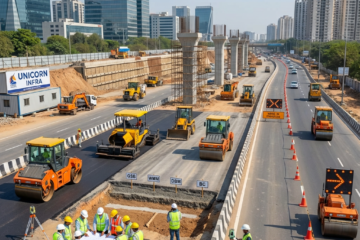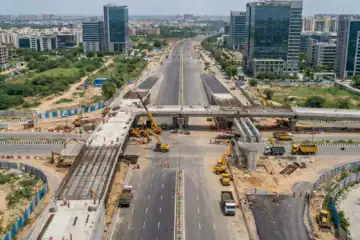
The National Capital Region (NCR) is undergoing a transformation driven by rapid urbanization and economic expansion. This growth has created an urgent need for robust, modern infrastructure to support its burgeoning population and industrial base. The strategic implementation of infrastructure development in NCR is not just about building roads and buildings; it is the backbone of the region’s economic vitality, connecting industrial hubs, streamlining logistics, and improving the quality of life for millions. As the region expands, the complexity of executing these large-scale projects also increases, demanding sophisticated planning, advanced engineering, and flawless execution. Addressing these challenges is crucial for sustaining momentum and ensuring that development is both efficient and sustainable for the long term. This landscape requires experienced partners who can navigate the complexities of modern construction, from initial planning to final delivery.
The Rising Importance of Infrastructure Development in NCR
The strategic significance of infrastructure development in the National Capital Region cannot be overstated. As a critical economic engine for the country, the NCR’s capacity to grow is directly tied to the quality of its foundational assets. A network of well-planned roads, highways, and expressways is essential for facilitating the seamless movement of goods and people, reducing transit times, and boosting commercial activity across cities like Delhi, Gurugram, Noida, and Ghaziabad. These corridors are the arteries that feed the region’s industrial and logistics sectors.
Beyond transportation, the development of specialized infrastructure such as logistics hubs and industrial corridors is attracting significant investment. These facilities are designed to optimize supply chains, support manufacturing growth, and create employment opportunities. The success of these initiatives hinges on a powerful synergy between government vision and private sector execution. Government bodies provide the regulatory framework and long-term planning, while private EPC (Engineering, Procurement, and Construction) contractors bring the technical expertise, operational efficiency, and innovation needed to bring these ambitious projects to life. This collaborative model is accelerating the pace of development and setting new benchmarks for quality and scale.
NCR Infrastructure Development Projects Shaping Regional Growth
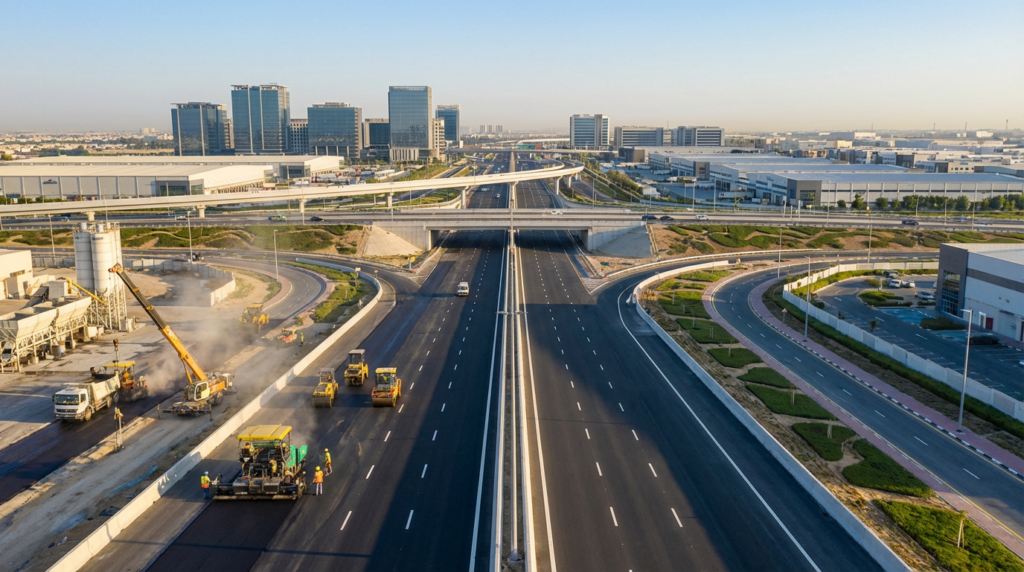
The landscape of the National Capital Region is being reshaped by a multitude of NCR infrastructure development projects designed to enhance connectivity and support industrial expansion. Key among these are major national highways and expressways that are decongesting urban centers and creating high-speed corridors for freight and passenger movement. Alongside these large-scale arteries, the development of urban roads, flyovers, and vehicular underpasses (VUPs) is critical for improving last-mile connectivity within densely populated areas. These projects are not just about easing traffic; they are catalysts for economic activity, enabling businesses to operate more efficiently. An equally important aspect of this growth is the construction of modern warehouse facilities, which are vital for the region’s booming e-commerce and logistics industries. The successful execution of these diverse projects relies heavily on the expertise of EPC contractors who can manage complex logistics, adhere to strict timelines, and ensure compliance with quality standards, turning ambitious blueprints into tangible assets.
Latest Infrastructure Development in NCR – What’s Changing on Ground
The current wave of latest infrastructure development in NCR is characterized by a significant shift towards speed, efficiency, and technological integration. Construction trends on the ground reflect a move away from traditional methods toward more agile and innovative approaches. Precast technology, for instance, is gaining widespread adoption in the construction of bridges, flyovers, and buildings, as it allows for faster assembly and minimizes on-site disruption. This method, combined with advanced project management software, enables contractors to monitor progress in real-time, manage resources effectively, and mitigate potential delays. Furthermore, the use of drones for site surveys and monitoring, along with Building Information Modeling (BIM) for precise planning and design, is becoming standard practice. These advancements are part of a broader push for faster execution models, where projects that once took years are now being completed in a fraction of the time, without compromising on quality or safety. This evolution is critical for keeping pace with the NCR’s dynamic growth.
Upcoming Infrastructure Projects in NCR Driving Future Demand
Looking ahead, the pipeline of upcoming infrastructure projects in NCR is set to further accelerate regional development and drive future demand for specialized construction services. Authorities have ambitious plans for significant road expansions, including the widening of existing highways and the creation of new ring roads and bypasses to accommodate rising traffic volumes. These projects are essential for linking emerging economic zones with established commercial centers. Alongside transportation, there is a strong focus on developing next-generation industrial and logistics infrastructure. This includes the establishment of multi-modal logistics parks, integrated manufacturing clusters, and state-of-the-art warehousing zones designed to support India’s “Make in India” initiative. A critical and often overlooked component of this expansion is the associated utility work. The strategic execution of electrical shifting works and the careful laying and shifting of water pipelines are foundational to clearing the path for these major developments, ensuring that new infrastructure can be built without disrupting essential services.
NCR Infrastructure Development Plans & Long-Term Vision
The long-term vision for NCR infrastructure development plans extends beyond mere construction, focusing on creating a sustainable, interconnected, and resilient urban ecosystem. Sustainability is at the forefront of this vision, with an increasing emphasis on green building materials, energy-efficient designs, and infrastructure that minimizes environmental impact. This includes projects aimed at water conservation, waste management, and the integration of green spaces within urban planning. Another key pillar of the long-term strategy is the development of multi-modal connectivity, which aims to create a seamless network of roads, metro lines, and railways. This integrated approach, supported by initiatives from bodies like the National Highways Authority of India (NHAI), ensures that commuters and goods can move efficiently across different modes of transport, reducing congestion and pollution. The concept of smart execution, leveraging data analytics and IoT, is also central to this vision, enabling authorities and partners to build and manage infrastructure more intelligently. This forward-thinking approach ensures that today’s projects are built to meet the needs of tomorrow.
The Role of Execution in Transforming Vision into Reality
While ambitious plans and large-scale investments are crucial, the ultimate success of infrastructure development hinges on the quality of execution. An experienced construction partner is essential for navigating the practical challenges that arise during a project’s lifecycle. This includes everything from meticulous site preparation and resource management to ensuring compliance with safety and environmental regulations.
A reliable partner brings more than just machinery and labor; they bring a wealth of experience and a problem-solving mindset. In a complex environment like the NCR, projects often involve intricate coordination with multiple government agencies, utility providers, and local communities. Efficiently managing these stakeholder relationships is key to keeping a project on schedule and within budget. At Unicorn Infra, our expertise in road and highway construction is built on a foundation of precision and reliability. We understand that even the most well-designed project can fail if not executed with skill and attention to detail.
Navigating Complexities: Utility Shifting and Foundational Works
A critical, yet often underestimated, aspect of major infrastructure projects is the management of existing utilities. Before any significant construction can begin on roads or buildings, a complex network of underground and overground utilities—such as water pipelines, sewer lines, and electrical cables—must be carefully shifted or relocated. This process requires specialized expertise and precise coordination to avoid service disruptions and costly delays.
The successful execution of water pipeline shifting and laying is fundamental to clearing the way for new developments. It demands detailed planning, advanced mapping techniques, and a deep understanding of local ground conditions. Any misstep can lead to project standstills and significant public inconvenience. As a company with a proven track record, we recognize that our ability to handle these foundational tasks with efficiency and care is what sets the stage for successful project delivery. Our commitment is to manage these complexities seamlessly, ensuring that the groundwork is laid perfectly for the larger vision to take shape.
Conclusion
The continuous growth of infrastructure development in NCR is fundamental to its position as a leading economic hub. The journey involves more than just constructing physical assets; it requires a holistic approach that balances rapid expansion with long-term sustainability and strategic planning. The synergy between government vision and private sector execution has proven to be a powerful formula for progress, enabling the region to build the roads, logistics hubs, and industrial corridors necessary for future growth. As projects become more complex, the emphasis on execution quality, technological adoption, and efficient management of foundational tasks like utility shifting becomes paramount. For stakeholders seeking a partner to navigate this dynamic landscape, a deep understanding of the region’s challenges and opportunities is essential. As an organization deeply rooted in this ecosystem, our story is one of contributing to this transformation with a steadfast commitment to engineering excellence and reliable delivery.